Home  ›  Brew Guides  ›  Espresso Brewing Guide
Brew Guide

Espresso Brewing Guide

Learn how to brew rich, balanced espresso with the proper grind size, dose, yield, extraction time, pressure, and dialing-in technique.

Quick brew recipeBold • Concentrated • Complex
Coffee18 g
Espresso yield36 g
Ratio1:2
GrindFine
Water temp199–203°F
Pressure9 bars
Extraction25–35 sec
YieldDouble shot

What Is Espresso?

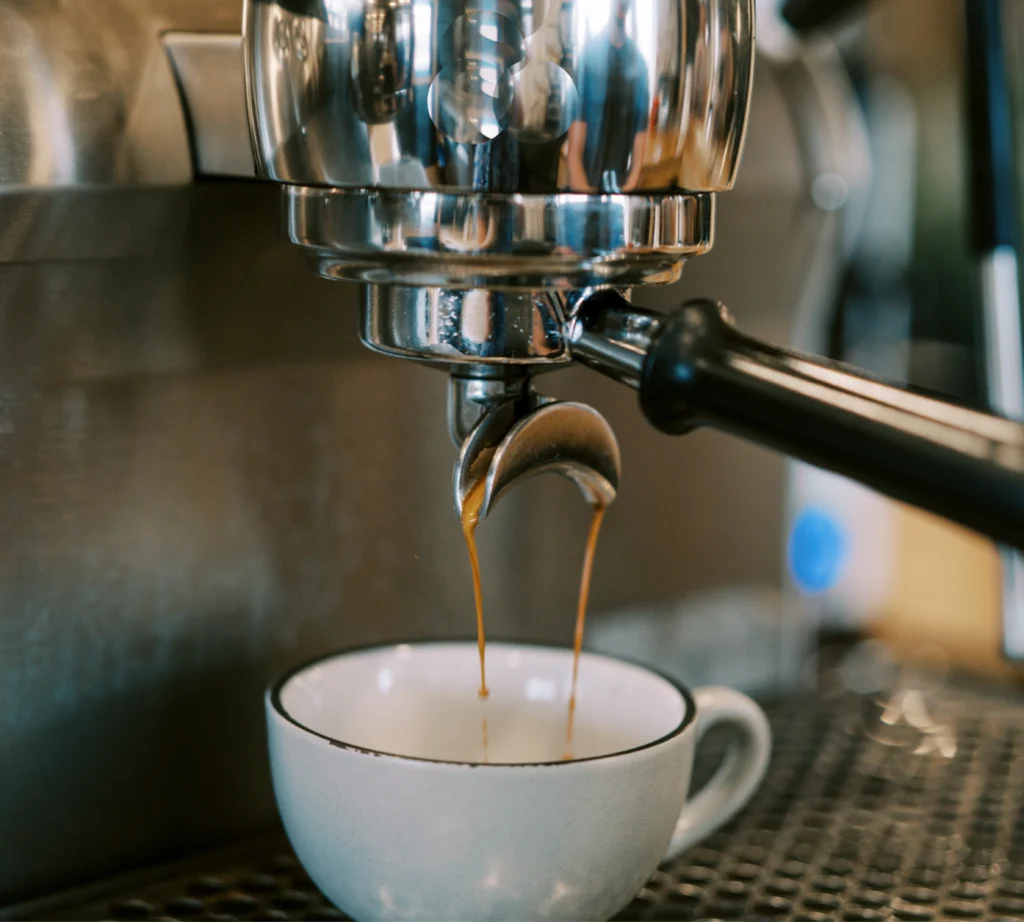
Espresso is brewed by forcing hot water through finely ground coffee under approximately nine bars of pressure, producing a concentrated coffee with exceptional body, sweetness, complexity, and crema.

Espresso is a brewing method—not a bean or roast. Nearly any coffee can be brewed as espresso, though coffees designed for espresso often emphasize sweetness, body, and balance. Because each variable matters, espresso is one of the most rewarding brewing methods to master.

A Brief History of Espresso

Espresso originated in Italy in the early 1900s as inventors searched for a faster brewing method for busy cafés. Modern espresso machines evolved from those early designs and now serve as a foundation of specialty coffee.

What You’ll Need

01Espresso machine
02Espresso grinder
03Freshly roasted coffee beans
04Digital scale
05Tamper
06Distribution tool (optional)
07WDT tool (recommended)
08Filtered water
09Knock box
10Microfiber towel
11Espresso cup

Choosing Your Espresso Equipment

Your machine controls pressure and water delivery, while the grinder controls resistance and extraction. Choose equipment that provides the level of control, convenience, and steaming capacity you need.

Machine typeBest forWhat to expect
Manual LeverHands-on enthusiastsMaximum control with a steeper learning curve and more physical involvement.
Semi-AutomaticMost home baristasA practical balance of control, repeatability, and affordability.
Heat Exchange / Dual BoilerFrequent milk drinks and advanced usersImproved temperature stability and the ability to brew and steam efficiently.
Super AutomaticConvenience-first brewingGrinding and brewing are automated with less manual control.

Choosing an Espresso Grinder

A quality grinder is arguably as important as the espresso machine. Look for burr grinding, stepless or micro adjustments, consistent particle size, and minimal retention. Avoid blade grinders.

Understanding Extraction

A balanced extraction highlights sweetness, acidity, and body. Under-extracted espresso often tastes sour, thin, or weak; over-extracted espresso can taste bitter, dry, or harsh.

The Best Coffee for Espresso

At Montana Coffee Company, we do not just recommend Rocky Mountain Roast for espresso—we trust it with every shot served in our café. After countless hours of dialing in recipes, tasting, and adjusting, it has earned its place behind our espresso bar through exceptional consistency, rich chocolate character, balanced sweetness, and a smooth finish that works beautifully alone or in milk-based drinks.

Espresso Ratio Guide

Shot styleCoffee doseEspresso yieldRatio
Ristretto (Short Shot)18 g27 g1:1.5
Traditional Espresso18 g36 g1:2
Lungo (Long Shot)18 g54 g1:3

Use 18 grams in and 36 grams out as the starting recipe. Taste the shot before changing the ratio.

How to Pull an Espresso Shot

Warm the machine

Allow the machine, portafilter, group head, and cup to heat thoroughly.

Grind 18 grams of coffee

Grind fresh coffee finely enough to create the resistance needed for a controlled extraction.

Distribute evenly

Break up clumps and spread the grounds evenly across the basket to reduce channeling.

Tamp level

Compress the coffee evenly with a level tamp so water flows uniformly through the puck.

Brew to 36 grams

Target 36 grams of espresso in 25–35 seconds at approximately nine bars of pressure.

Taste and adjust

Evaluate sweetness, acidity, bitterness, body, and finish. Change only one variable at a time.

Dial In Your Espresso

ProblemLikely causeWhat to change
Shot runs too fastGrind is too coarse or puck resistance is too lowGrind finer.
Shot runs too slowGrind is too fine or puck resistance is too highGrind coarser.
Espresso tastes sourUnder-extractionIncrease extraction by grinding finer, extending yield, or increasing contact time.
Espresso tastes bitterOver-extractionReduce extraction by grinding coarser, shortening yield, or reducing contact time.
Little cremaCoffee may be staleUse fresher coffee and verify the machine is fully heated.

Common Espresso Mistakes

  • Using stale coffee.
  • Skipping the scale.
  • Tamping inconsistently or at an angle.
  • Failing to preheat the machine and portafilter.
  • Changing multiple variables at once.
  • Ignoring water quality.

Cleaning & Maintenance

  • Daily: Clean the steam wand, flush the group head, empty the drip tray, and clean the baskets.
  • Weekly: Backflush according to the machine manufacturer’s instructions.
  • Monthly: Descale if needed and inspect seals and other wear components.

Espresso Pro Tips

  • Fresh coffee matters.
  • The grinder matters almost as much as the machine.
  • Change only one variable at a time.
  • Always weigh both dose and yield.
  • Keep notes while dialing in.

Frequently Asked Questions

Per ounce, yes. Espresso is more concentrated, although total caffeine depends on the number of shots and the size of the brewed coffee being compared.
Yes, but freshly ground coffee usually produces better flavor and gives you the fine grind adjustments needed to control extraction time.
Sour espresso is usually under-extracted. Grind finer or otherwise increase extraction, then taste again before changing another variable.
Coffee freshness is a major factor. Use freshly roasted coffee and make sure the machine is fully heated and operating correctly.
Nine bars is the standard starting point for this recipe. Consistent pressure, puck preparation, and flow matter more than chasing a higher pressure number.
Start with a 1:2 ratio: 18 grams of ground coffee producing 36 grams of espresso in approximately 25–35 seconds.

Dial In Your Next Espresso

Use the Montana Coffee Company Coffee Ratio Calculator to calculate dose and yield for your next espresso recipe.

Shop Related Coffees